You type your own name into a search engine and find something you never agreed to: a photo someone else published, an old profile resurfacing, or an image on a site you have never heard of. The good news: in most cases it can be removed.
What can be removed, and what cannot
Realistically removable: images you hold the rights to or that clearly show you, personal data with no public interest attached, content from hacked or compromised accounts, impersonation profiles and deepfakes, and outdated information with no bearing on the present.
Harder cases: content with demonstrable public interest, current news reporting and court decisions. Anyone promising blanket removal there is overpromising. We tell you upfront what is realistic.
Two legal routes: DMCA and GDPR Article 17
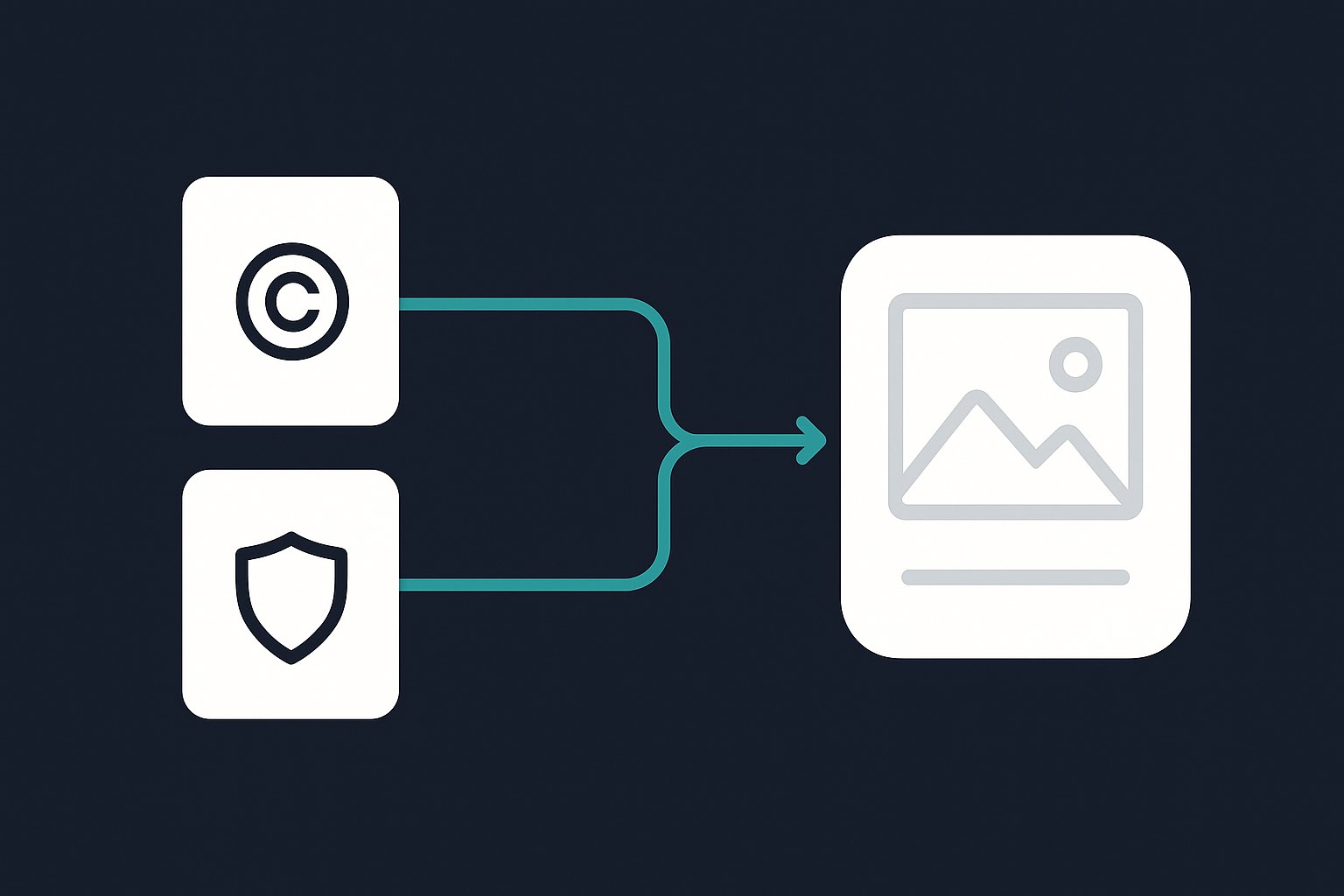
Whether a request is actioned or ignored is decided by the legal basis. There are essentially two:
DMCA takedown notice (copyright). Applies when you are the creator of the image, a selfie or your own photography for instance. It is internationally established, routinely processed by hosting providers and search engines, and usually acts fast.
GDPR Article 17 erasure request (right to be forgotten). Applies regardless of who took the image, as soon as personal data is involved and no overriding legitimate interest in keeping it exists. The broader route when copyright is not yours to claim.
In many cases both apply. Then we file in parallel, because different platforms respond at different speeds to each basis.
Search engine and source site: why you need both
Removal is two separate steps that are often confused.
De-indexing removes the link and thumbnail from search results. The content stays on the website but stops surfacing when someone looks up your name. This works fastest and solves most of the practical problem, because almost nobody finds content that does not rank.
Source takedown actually removes the file from the server. That is the more durable outcome, but it takes longer and depends on the site cooperating.
Pursuing only one leaves you exposed: de-indexing alone leaves the file online, while source removal alone often leaves cached entries and thumbnails in the results. So both run in parallel.
How a removal runs
- Confidential intake. You tell us what is out there and where, or we help you find it. You do not have to explain the situation twice.
- Legal classification. The right route is determined for each individual item: DMCA, GDPR, or both. A wrongly grounded request gets ignored; a correctly grounded one gets actioned.
- Coordinated filing. The website, the hosting provider or CDN, and the search engines are contacted simultaneously, so the content cannot simply move one step downstream.
- Follow-through and monitoring. Every request is tracked to resolution, and monitoring continues afterwards.
When a site does not respond
Many sites are deliberately built to make removal exhausting: no imprint, no working contact form, no reply. Then we escalate, to the hosting provider, the CDN operator or the domain registrar. In parallel, de-indexing continues with the search engines, which decide independently of the source site.
What we need from you
Before a removal request is processed at all, platforms and search engines need to be certain it comes from the affected person, or from someone acting on their behalf. Otherwise anyone could have content about other people taken down. That means two documents:
- An authorisation letter instructing us to act on your behalf. We provide a ready-made template; you sign it digitally.
- A copy of your ID or passport as proof of identity. Black out everything that is not needed: only your name, your photo and the document number need to stay visible. The full ID number, date of birth, address and machine-readable zone can all be redacted.
These documents are used solely for the removal requests, transmitted encrypted, and deleted once the case is closed. We do not pass them to third parties, other than the bodies where a given request is filed, and there only to the extent strictly required.
Why monitoring is part of the job
Removed content has a way of coming back: through mirror sites, re-uploads, or aggregators republishing old datasets. Without follow-up monitoring you often notice months later. So the work does not end with the first confirmation; it continues as an ongoing check.
Who this is for
Individuals whose private images were shared without consent, whether after a hacked account, through a former relationship, or via sites that scraped content that was never meant to be public. Equally for impersonation profiles, deepfakes and old content you have a legal right to have removed.
Companies and executives who need to manage what is visible about leadership, employees or the brand: unauthorised use of corporate photography, former employees lingering on old marketing pages, impersonation accounts or outdated content.
What does removal cost?
We work on a flat fee of 2,000 euros covering up to 200 images or URLs per case. One price, no per-site fees, no surprises on the invoice. Larger cases receive a clear custom quote upfront.
Frequently Asked Questions
Found something that should not be there? Tell us what you are dealing with. The first conversation is confidential and without obligation: get in touch.